


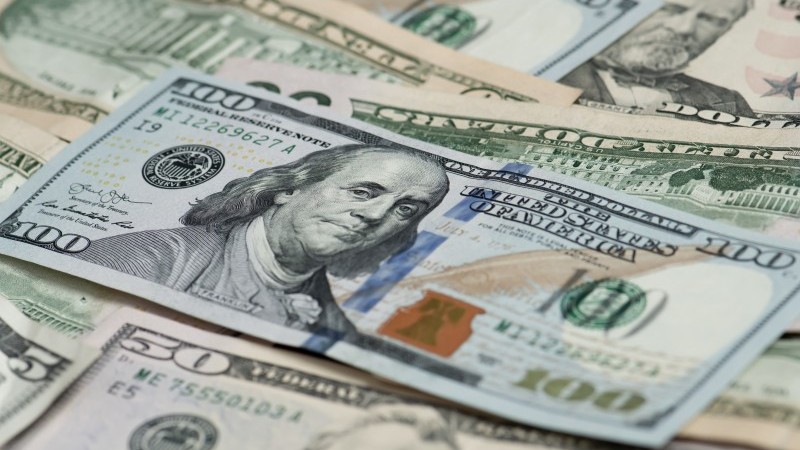
The Dollar as the Foundation of the Postwar Order
Even after the collapse of the gold standard in 1971, the dollar retained its dominant position. The reason was no longer formal convertibility into gold, but trust in the U.S. state, its institutions, legal system, and financial markets. U.S. Treasury securities became the backbone of global reserves.
For central banks, they were ideal: a deep market, high liquidity, minimal credit risk, and the ability to sell quickly in times of crisis. The dollar was not just a currency—it became infrastructure.
Why Central Banks Followed the Same Pattern for Decades
For a long time, this system had no serious alternative. The euro was too young, the Japanese yen limited, and gold was considered a non-productive asset with no yield. Central banks were not seeking returns, but stability and predictability—and the dollar provided exactly that.
- it was the primary unit of account in international trade,
- the foundation of commodity markets,
- the key currency for debt settlement,
- and the basis for crisis liquidity through Federal Reserve swap lines.
In such an environment, there was little reason for doubt. But systems do not collapse because they stop working—they collapse because the conditions under which they operate change.

The Turning Point After 2008: When Risk Begins to Accumulate
The global financial crisis of 2008 was the first serious signal that something in the system was no longer balanced. Bank bailouts, massive money printing, and an explosion of public debt were necessary measures—but they carried long-term consequences.
U.S. government debt began to grow at an exponential rate. Interest rates fell to historic lows and then remained low for more than a decade. Central banks found themselves in a world where a “risk-free” asset no longer offered real returns, but merely preserved nominal value.
“Despite this, the basic logic had not yet changed. The dollar remained the only serious option. The real break came later.”

2022: When a Reserve Asset Becomes a Political Tool
The freezing of Russian foreign exchange reserves in 2022 was an unprecedented event. For the first time in modern history, the assets of a major country, denominated in foreign currencies, were systematically blocked based on a geopolitical decision.
Regardless of one’s assessment of the conflict itself, the message was clear: reserve assets are no longer purely financial—they are also political. U.S. and Western securities are no longer neutral under all circumstances.
For many central banks—especially outside the Western political sphere—this represented a fundamental reassessment of risk. The question was no longer whether risk exists, but when it might materialize.
The best time was yesterday, but the right time is today.”
Bojan Pravica Elementum
The Difference Between Liquidity and Sovereignty
In this context, it is crucial to understand the difference between two reserve functions:
- liquidity, which the dollar still provides,
- sovereignty, which the dollar cannot guarantee in all scenarios.
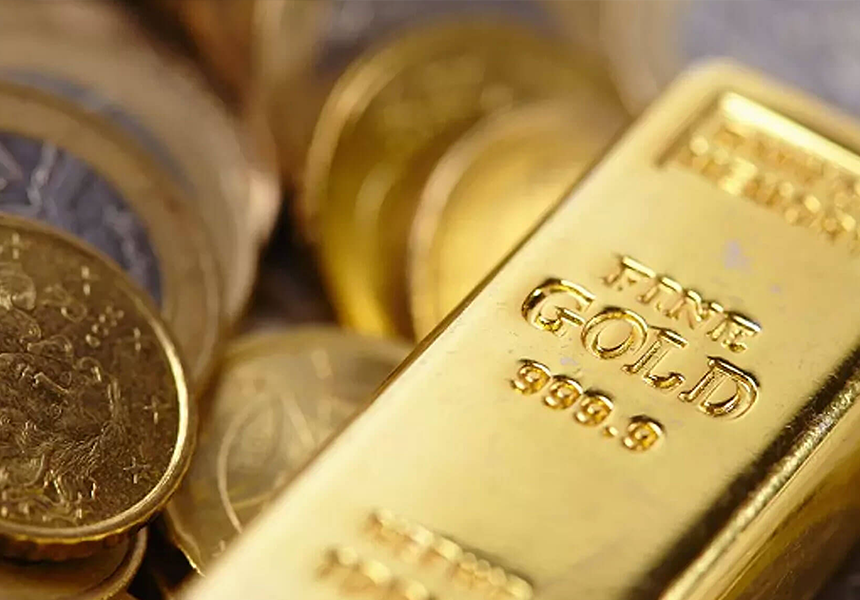
Gold has one characteristic that no fiat currency possesses: it is not the liability of another country. It is not debt, not a promise, and not dependent on the political will of an issuer. It exists physically and definitively.
For central banks, gold therefore does not represent a replacement for the dollar, but a complement to the system. It is insurance against extreme scenarios—not a tool for everyday use.
Why This Shift Is Happening Quietly
Central banks rarely act impulsively. Their strength lies in patience. When they change strategy, they do so gradually, without dramatic statements, because stability itself is part of their mandate.
That is precisely why the current shift is so important. It is not a one-off reaction, but a multi-year trend reflected in:
- the gradual reduction of U.S. Treasury holdings,
- increasing gold reserves,
- greater regional diversification of reserve assets.
This process is occurring primarily in countries outside the Western monetary core—not because they oppose the dollar, but because they seek to reduce one-sided dependence.
Does This Mean the End of the Dollar?
No. And this is crucial to understand.
The dollar is not disappearing. It remains indispensable for global trade, financial flows, and crisis liquidity. But its role is changing: from the only anchor to one of several components of the system.
That is the essential difference.
In a world where geopolitical tensions are rising, debt is growing, and trust in institutions is no longer taken for granted, central banks are not seeking ideology. They are seeking resilience.
Expert Perspective
“Gold is a currency in the truest sense of the word. When everything else fails, gold remains.”
Today, this statement sounds less like theory and more like a description of reality—one in which central banks are once again recognizing the fundamental purpose of reserves: not maximizing returns, but ensuring the survival of the system.

Conclusion
The global monetary system is not collapsing—it is adapting. The silent consensus that U.S. Treasuries are universally and unconditionally safe is no longer self-evident. This does not imply chaos, but a transition toward a more diversified, more complex, and less centralized order.
In this process, gold is not returning as a symbol of the past, but as a tool of the future—as a neutral foundation in a world where financial assets also carry political risk.
In the next article, we will look at the numbers: how much gold central banks are actually buying today, and why this represents the largest accumulation since the collapse of the Bretton Woods system.