
Written by: Bojan Pravica, founder of Elementum
If we were to evaluate gold solely through the prism of financial markets, it could be understood as just another investment reacting to interest rates, inflation, and dollar fluctuations. But when central banks start buying gold in large quantities, the story changes completely.
Central banks do not buy gold for short-term profit. They do not enter the market because of technical signals or sentiment. Their decisions are slow, conservative, and focused on decades, not quarters. That is precisely why data on their purchases is extremely important.
In recent years, this data shows something remarkable: the world’s central banks are buying gold on a scale not seen since the collapse of the Bretton Woods system in the early 1970s. This is no coincidence. And this is not a transitory phenomenon.
Gold after 1971: From monetary anchor to fringe asset
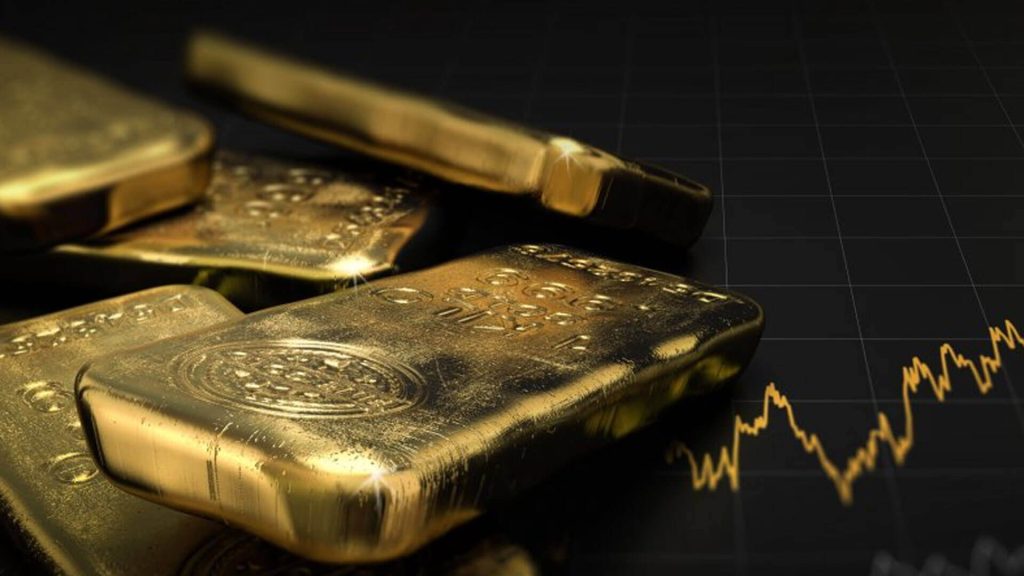
When the United States severed the dollar’s link to gold in 1971, gold gradually lost its official monetary status. Central banks still held it on their balance sheets, but it was treated as a remnant of a past system – an inert asset with no yield.
In the 1980s and 1990s, many Western central banks even sold gold. The prevailing belief was that sovereign bonds of developed nations, especially US Treasuries, were a more efficient and modern form of reserves. Gold was considered a relic of the past.
This attitude lasted for several decades. But as is often the case in the history of money, it turned out that what is pushed to the margins is often waiting for its moment to return.
The first signs of change: Post-financial crisis, but unnoticed
After the global financial crisis of 2008, small but significant changes began to appear on central bank balance sheets. Some developing nations gradually started increasing gold reserves, primarily to diversify risk.
This process was slow and did not attract major attention. Financial markets were focused on interest rates, quantitative easing, and the growth of stock indices. Gold remained in the background.
It is crucial to understand that this was not yet a break. It was merely the prelude.
2022: The moment the trend accelerated
The real turnaround happened after 2022. That was when central banks started buying gold in quantities that could no longer be ignored.
It is important to emphasize: this acceleration did not happen due to changes in interest rates or inflation expectations. It happened due to a change in perceived systemic risk.
The freezing of a sovereign nation’s foreign exchange reserves made it clear to many central banks that reserve assets are no longer just economic, but also political. Gold, which has no issuer and represents no other nation’s liability, gained entirely new weight in such an environment.
Record annual purchases: Why quantities matter more than price
When discussing gold, most attention is usually focused on price. But to understand central bank reserve policy, price is secondary. Quantities are key.
In recent years, central banks have been:
- net buyers of gold for several consecutive years,
- buying in volumes exceeding long-term averages,
- and doing so despite rising prices.
This is a fundamental difference compared to past cycles. Central banks are not waiting for ‘better entry points’. They are buying because they are not following market logic, but strategic logic.
When institutions whose mandate is system stability buy gold regardless of price, it indicates a deeper shift in priorities.
Breaking with history: From sellers to strategic buyers
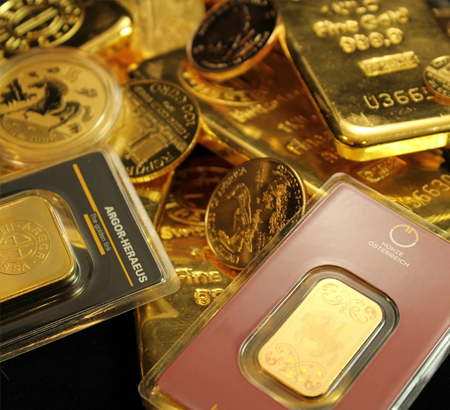
In the 1990s, central banks were a major source of gold supply. Today, they are one of the largest sources of demand. This reversal is not trivial.
It means the view on gold’s role has changed:
- from a passive reserve remnant,
- to an active tool for balancing systemic risks.
Gold is once again being treated as a monetary asset – not in the sense of daily payments, but as the ultimate form of trust when other forms fail.

Why these purchases are not speculative
It is important to distinguish between:
- investment demand,
- and reserve demand.
Central banks are not buying gold because they expect price growth in the next year. They are buying it because they want to reduce dependence on a single system, a single currency, and a single legal jurisdiction.
This is the difference between trading and risk management.
»The best time was yesterday, but the right time is today.«
Bojan Pravica Elementum
Who is buying gold – and who isn't
Although we will not dive into a detailed geopolitical analysis in this article (that follows in the next part of the series), it is worth highlighting one fact: the majority of new purchases come from countries outside the traditional Western core.
This does not mean rejecting the dollar, but rather complementing it. Countries want greater resilience for their reserves, more maneuvering space, and less one-sided exposure.
In this context, gold acts as universal insurance – not against inflation, but against systemic fractures.
Why the trend won't end with the next interest rate cycle
A common mistake is the interpretation that central banks will stop buying gold once interest rates stabilize or fall. This interpretation misses the point.
It is a structural, not a cyclical change. As long as:
- public debt levels remain high,
- financial assets can be subject to sanctions,
- and the world remains geopolitically fragmented,
the need for a neutral reserve asset will exist.

Expert View
Former Federal Reserve and Credit Suisse strategist, Zoltan Pozsar, summarized the trend with the following words:
“Central banks do not buy gold to make money. They buy it when they start questioning the sustainability of the system they helped build.”
This statement concisely summarizes the essence of current events.

Conclusion
The history of monetary systems teaches us that the biggest changes do not happen on the front pages, but in the background. Today’s accumulation of gold by central banks is exactly such a case.
It is not a flight from the dollar, but a search for balance. It is not a return to the past, but an adjustment to the future. Gold is not returning to vaults as an ideological symbol, but as a practical tool in a world where financial security is no longer taken for granted.
In the next article, we will look at who exactly is behind these purchases and why countries outside the Western core are today the main drivers of the re-monetization of gold.